Keynote Speakers
Professor Nic Lane
University of Cambridge, UK
Nic Lane is a full Professor in the department of Computer Science and Technology at the University of Cambridge and holds a Royal Academy of Engineering Chair in Decentralized AI. He is also a Fellow of St. John’s College. At Cambridge, Nic leads the Cambridge Machine Learning Systems lab (CaMLSys; https://url.uk.m.mimecastprotect.com/s/sFDHCElMMc3M222jIoixU7sn8i?domain=mlsys.cst.cam.ac.uk). The mission of CaMLSys is to invent the next-generation of breakthrough ML-centric systems. Alongside his academic roles, Nic is the co-founder and Chief Scientific Officer of Flower Labs (https://url.uk.m.mimecastprotect.com/s/39AiCGZOOh1GRRR9uNs4UBgDG6?domain=flower.ai), a venture-backed AI company (YC W23) behind the Flower open-source federated learning framework. Flower Labs seeks to enable an AI future that is collaborative, open and decentralized. Nic has received multiple best paper awards, including ACM/IEEE IPSN 2017 and two from ACM UbiComp (2012 and 2015). In 2018 and 2019, he (and his co-authors) received the ACM SenSys Test-of-Time award and ACM SIGMOBILE Test-of-Time award for pioneering research, performed during his PhD thesis, that devised machine learning algorithms used today on devices like smartphones. Nic was the 2020 ACM SIGMOBILE Rockstar award winner for his contributions to “the understanding of how resource-constrained mobile devices can robustly understand, reason and react to complex user behaviors and environments through new paradigms in learning algorithms and system design.” In 2011, Nic received his Ph.D. from Dartmouth College. He also holds an M.Eng from Cornell University and a BSc(Hons) from the Uni. of Waikato.


Professor Keeley Crockett
Manchester Metropolitan university, UK
Professor Keeley Crockett is a leading academic in the field of Computational Intelligence at Manchester Metropolitan University (MMU), and Chair of the IEEE Technical Committee SHIELD (Ethical, Legal, Social, Environmental and Human Dimensions of AI/CI). Her research spans ethical AI, fuzzy systems, natural language processing, semantic similarity, psychological profiling, conversational agents, and intelligent tutoring systems. At MMU, she leads the Machine Intelligence and Data & AI Ethics themes within the Centre for Advanced Computational Science, and has secured funding from EPSRC, EU Horizon 2020, and UKRI, among others. She is also a trusted advisor on national and international platforms, contributing to the UKRI AI & Robotics Strategic Advisory Team, Policy Connect inquiries, and global frameworks for ethical AI.
Alongside her research and policy contributions, Professor Crockett has built strong partnerships with industry, government, and community organisations. She has co-led the £6m Greater Manchester AI Foundry, developed AI assessment frameworks for public sector organisations, and collaborated with the Alan Turing Institute, ICO, and SMEs to evaluate transparency and accountability in AI systems. Her leadership roles within IEEE are extensive, including serving on the IEEE CIS ADCOM, editing multiple IEEE journals, and chairing international conferences such as IEEE SSCI and IEEE FUZZ. Widely published with over 130 peer-reviewed papers, three textbooks, and extensive doctoral supervision experience, she is also an active STEM Ambassador and a passionate advocate for public engagement with AI.
Professor Ioan Nistor
University of Ottawa, Canada
Ioan NISTOR is a Professor of Hydraulic and Coastal Engineering in the Department of Civil Engineering at the University of Ottawa, Canada. Dr. Nistor investigates hazards associated with extreme coastal hazards such as tsunamis and hurricanes, coastal structures, impacts of extreme events on coastal communities and infrastructure. Prior to joining the University of Ottawa more than two decades ago, Prof. Nistor spent several years as a senior consulting engineer with AECOM-TECSULT in Montreal, Canada. In recognition of his work in the field of disaster prevention and mitigation, Prof. Nistor was appointed Lead of the Technical Theme on Water Disaster, which is one of the four major themes of the International Association of Hydro-Environment Engineering and Research (IAHR).
Prof. Nistor elected Fellow of the Canadian Academy of Engineering (CAE), Fellow of the Canadian Society for Civil Engineering (CSCE) and Fellow of the Engineers Institute of Canada (EIC). He is the only international Voting Member of the ASCE7 Tsunami Committee, a Member of the JSCE Tsunami Committee (Debris Group), as well as member of the Tsunami Working Group of the Federation internationale de beton (FIB).


Professor Anusha Shah
Plan for Earth, UK
Professor Anusha Shah is a distinguished global leader in climate resilience, water and environmental engineering, with over twenty-six years of experience advancing sustainable development and nature-positive infrastructure across the UK and internationally. As the Past President of the Institution of Civil Engineers (ICE), she made history as only the third woman and the first person of colour to hold the role in over 205 years.
She is currently the Founder & CEO of 'Plan for Earth', a catalyst for systemic change in sustainability, climate change adaptation and nature positive infrastructure. She recently completed a successful tenure as Global Senior Director for Climate, Water & Nature at Arcadis where she led transformative climate strategies and represented the organisation on the London Climate Ready Partnership and the World Business Council for Sustainable Development’s 50L Home Initiative.
Professor Shah’s non-executive portfolio includes roles as a Non-Executive Director at the UK Met Office and Trustee at Green Alliance, and she previously chaired the Thames Estuary Partnership Board and ICE's Thomas Telford Limited Board. In academia, she has held visiting professorships at King’s College London and the University of Edinburgh, and lectured widely at institutions including Oxford, Cambridge, Newcastle, and the University of East London (UEL). She was awarded an Honorary Doctorate in Engineering by UEL and University of Heriot Watt for her services to climate change. She was also awarded honorary Professorship from University of Wolverhampton and Amity University in India.
A passionate advocate for equity, inclusion, and climate justice, Professor Shah has contributed to numerous national and international publications and reports. Her accolades include being named among the UK’s Top 50 Women Engineers in Sustainability, CECA Inspiring Engineering Award, BME Leader of the Year, University of Surrey Alumni of the Year and has been recognised by Climate Reframe as one of the UK’s leading BAME voices on climate change.
Professor Roger Flanagan
University of Reading, UK
Professor Roger Flanagan is a globally renowned leader in construction management and engineering, with an illustrious career spanning more than four decades. He is Professor of Construction Management at the University of Reading, UK, where he has also served as Dean of Faculty and Head of School. Widely recognised for shaping the discipline internationally, his research and teaching have influenced construction practices, policies, and education across the world.
Professor Roger Flanagan has held visiting and honorary professorships at leading universities across Asia, Australia, Africa, Europe, and North America, including Tsinghua University (China), University of Hong Kong, University of Cape Town (South Africa), Chalmers University of Technology (Sweden), and the University of New South Wales (Australia). His global academic footprint underscores his reputation as one of the foremost international voices in construction management and engineering.
He has supervised and examined doctoral research across the globe, shaping generations of scholars and professionals. Professor Flanagan is the author and co-author of over 180 technical papers and 10 books, including the widely referenced New Code of Estimating Practice (2016), and has led major international research projects on risk management, competitiveness, innovation, and future trends in the construction sector.
In addition to his academic achievements, Professor Roger Flanagan has made a profound impact on professional practice. He is a Fellow of the Royal Institution of Chartered Surveyors, a Fellow of the Institution of Civil Engineers, and a Past President of the Chartered Institute of Building (CIOB). He has served on boards of major international construction and engineering firms, including Skanska AB (one of the largest construction groups in the world) and Halcrow Group. His advisory work has guided governments, professional bodies, and leading contractors globally.
Professor Roger Flanagan’s career reflects his dedication to bridging academia, industry, and policy. His keynote will draw on his vast international experience, offering invaluable insights into the future of global construction management and the role of innovation in shaping the built environment.


Dr Lisa Cameron
Former Member of Parliament, UK
Dr Lisa Cameron is a former Member of Parliament. She has dedicated her career to amplifying underrepresented voices, advancing mental health, and championing disability inclusion while shaping the UK’s approach to emerging digital technologies. As founder and chair of Parliament’s first All Party Group on Digital Assets and Cryptocurrency, she guided national debate from its infancy to over 250 parliamentary contributions by 2024.
Since leaving parliament in 2024, Dr Cameron has founded the UK-US Crypto Alliance and led the Digital Legislators Forum, providing strategic advice across the digital asset sector. Her leadership on digital skills, future jobs, and cryptocurrency reflects a rare blend of empathy and vision, an inspiring example of compassionate, forward-thinking policymaking for our leaders.
Dr Komali Kantamaneni
University of Lancashire, UK
Dr Komali Kantamaneni is an internationally recognised expert in climate change, coastal vulnerability, disaster risk reduction, and environmental sustainability. She is a Senior Coastal Scientist in the School of Engineering and Computing at the University of Lancashire and Co-Director of the United Nations SPIDER–UK Regional Support Office, working with UN agencies, governments, and partners to strengthen disaster risk management using space-based and geospatial technologies.
Her work spans coastal science and engineering, climate hazard modelling, AI-enabled environmental pollution analysis, socio-ecological vulnerability assessment, GIS-based risk mapping, and nature-based solutions. She advised the United Nations Philippines Technical Advisory Mission (2022) on ecosystem-based DRR, climate adaptation, and geospatial intelligence, advancing SDGs 13, 11, and 14. She has led interdisciplinary teams and produced high-impact publications, including large-scale UK coastal vulnerability studies with international recognition.
Dr Kantamaneni contributes to science-policy integration, including the UK Parliament Post-Horizon Scan 2024 on environment, climate, energy, food systems, and rural affairs. Her research is cited by the World Bank and UN-Habitat. She has secured over £700,000 in grants, leads two REF 2029 impact case studies on climate and disaster resilience, and holds visiting and advisory roles at Vellore Institute of Technology and Anant National University. A frequent keynote speaker, she presents globally on climate adaptation, coastal resilience, geospatial and AI approaches to DRR, environmental pollution, and science-to-policy translation.
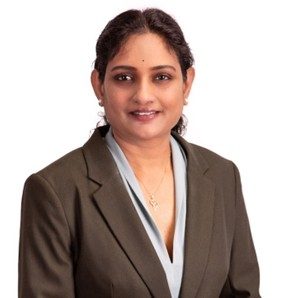

Dr Imran Latif
Johnson Controls International, USA
Based in New York City, Imran Latif is the Global Vice President of Technology and Innovation for Data Centers at Johnson Controls International, where he leads multidisciplinary global teams driving cutting-edge technology integration and shapes strategic portfolios through M&A for JCI's global data center business. He has structured and executed strategic acquisitions exceeding multiple billions in value, bringing deep expertise in technical due diligence, infrastructure integration, and post-merger value creation.
With over two decades of experience spanning the complete lifecycle of AI/HPC hyperscale data centers, Imran has led the design, build, and operational management of gigawatt-scale facilities for major hyperscalers, colocation providers, research institutions, and Fortune 100 enterprises worldwide. His technical leadership encompasses governance frameworks for AI deployments at unprecedented scale, extreme rack density optimization, comprehensive thermal management from direct-to-chip liquid cooling to full immersion systems, and GPU cluster architecture with high-bandwidth interconnects enabling seamless scaling across thousands of accelerators. He champions circular economy principles in data center design, bridging the critical gap between physical infrastructure and computational performance.
His research is featured in Lawrence Berkeley National Laboratory's 2024 US Data Center Energy Usage Report, a Congressionally mandated study shaping national energy policy. He optimizes critical metrics including tokens-per-watt and Power Usage Effectiveness for large-scale LLM training and high-performance computing workloads.
Previously, as Chief Operating Officer for Data Center Infrastructure at the U.S. Department of Energy's Brookhaven National Laboratory, Imran's leadership proved instrumental in supporting computational infrastructure for CERN's Large Hadron Collider experiments contributing to the Nobel Prize-winning Higgs boson discovery. He directed deployment of IBM's Blue Gene/Q supercomputer, ranked Top 5 globally on TOP500 and first on both the Graph500 and Green500 benchmarks. He also led infrastructure implementation for a 50-qubit superconducting quantum computer, managing extreme requirements including sub-millikelvin cooling and electromagnetic isolation for quantum coherence. During his tenure, he mentored graduate and post-graduate students on DOE-funded projects spanning AI, energy systems, and engineering disciplines.
Imran holds a Master of Science in Mechanical Engineering from the City University of New York and is completing his PhD in Artificial Intelligence from Florida Atlantic University, with research focused on optimizing infrastructure for AI workloads. He is a licensed Professional Engineer in New York and Texas and a frequent keynote speaker at Supercomputing (SC), Open Compute Project (OCP), and Data Centre Dynamics (DCD).
Mr Ambarish Mitra
Greyparrot waste Intelligence, UK
Ambarish Mitra is a serial entrepreneur and tech innovator who has spent his career turning radical ideas into world-changing companies, from co-founding Blippar, one of the U.K.'s first tech unicorns, to launching Greyparrot in 2019, now the global leader in AI waste analytics and a TIME Best Invention of 2025. At Greyparrot, he is tackling one of the most data-poor industries on the planet, deploying AI and computer vision to make the world's waste streams visible for the first time, empowering businesses, policymakers and recyclers to make the data-driven decisions that will power the circular economy.


Dr Fragkoulis Kanavaris
Arup, UK
Dr Fragkoulis Kanavaris is Arup's global lead for concrete materials and decarbonisation and leads Arup’s Specialist Technology, Analytics and Research team in London, UK. He is an expert on concrete materials, sustainability, decarbonisation, durability and concrete technology. Fragkoulis has contributed to more than 400 projects worldwide holding leading design positions in major infrastructure projects such as High Speed 2 (£45bn) and HARP (£3bn). He has published more than 60 articles in journals, conferences, books and policy documents and has received numerous awards for his contribution in concrete He is chairing and actively participating in several technical committees and has published more than 60 articles in journals, conferences, books and policy documents. He has received several awards for his scientific and industry contributions on concrete technology, sustainability and engineering from Royal Academy of Engineering and RILEM and is a Fellow of the Institute of Materials Minerals and Mining.